Waymo's own lidar turns self-driving hardware into a cost race
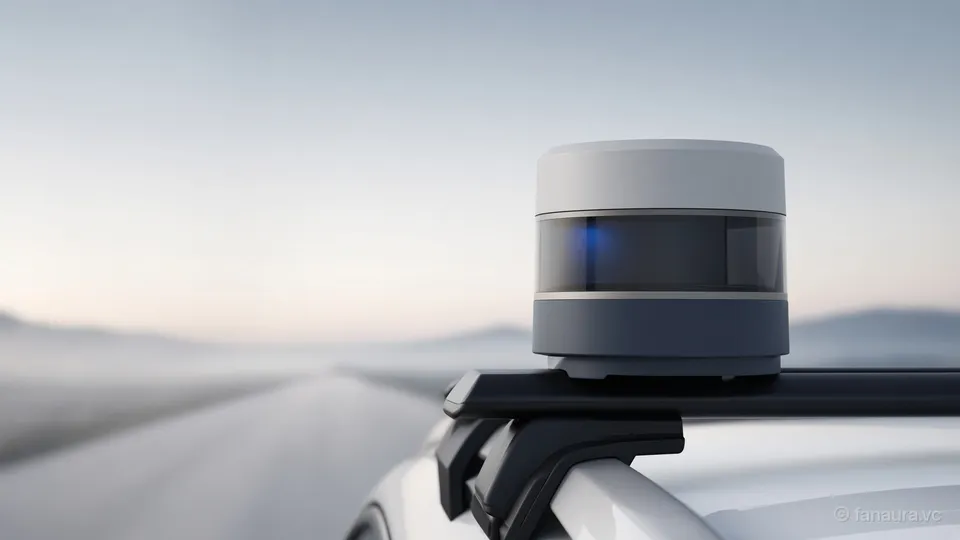
Waymo cut the cost of a top lidar sensor by more than 90% by building it in-house, moving margin from suppliers to whoever owns the driving system.
Waymo has cut the cost of a top-of-the-range lidar, the laser sensor that maps a car's surroundings, by more than 90% by designing it itself. A single unit cost upwards of $75,000 when Google began its self-driving project. At the Detroit auto show on 8 January, Waymo said its new set of lidar, radar and cameras is built entirely in-house and will ride on Chrysler Pacifica hybrid minivans on public roads in California and Arizona this month.
The cut changes who earns money in autonomous driving. Sensors that cost as much as the car rule out any fleet business; sensors at a tenth of the price turn the economics of a driverless vehicle into a question of software and utilization. By pulling the hardware in-house, the company with the most driving experience also takes the margin a supplier would have charged, and it sets a cost benchmark that every independent sensor maker now has to beat.
The announcement fits a business taking shape. Google's self-driving project became Waymo, a separate company within Alphabet, in December, and it describes itself as a self-driving technology company rather than a carmaker, with ride-hailing, trucking, logistics and licensing to automakers among its possible businesses. Its partnership with Fiat Chrysler, agreed last May, covers 100 minivans adapted for its system. The automaker supplies the vehicle; Waymo owns the driving system, sensors included. Control of the costliest component is what makes that division of labor pay.
The message for founders cuts both ways. Selling sensors to the leader is now harder, because the leader makes its own. Demand for affordable perception widens everywhere else: automakers without Waymo's depth in engineering, trucks, warehouse and delivery robots, mapping fleets, all of which need sensors they cannot design themselves. A start-up that takes another order of magnitude out of lidar cost for those buyers, or writes the software that makes cheaper sensors good enough, sells into a market Waymo's figures have just made credible.
Fanaura weighs machine learning in physical products through the bill of materials as much as through the model, because the price of the sensor stack decides whether a driverless vehicle, a warehouse robot or a delivery cart can ever earn back its cost. That is the arithmetic behind Fanaura's investment thesis, and it is the first question we put to founders with hardware-heavy plans.
A cheaper sensor does not solve the hard part, software that handles rare situations safely, and Waymo's cost figure comes with no price list anyone can check. Both points stand. The sensor savings mean little until the cars carry passengers without a safety driver. The decisive signal is the move from test fleet to paying riders: once Waymo charges for trips, its cost per mile becomes visible, and the lidar cut either shows up in the fare or it does not.
Autonomy has become a cost race, and its leader intends to own the most expensive part.
Building an AI-native company? Apply in five minutes. →
More from Fanaura
Building cheaper perception for vehicles, robots or mapping fleets? Send us the project.
Fanaura invests its own capital and the capital of its limited partners (LPs), usually through a separate SPV for each deal. If we see a fit, we get in touch.
Get the news by email
One short note each weekday. No marketing, and you can unsubscribe at any time.