Tesla's Dojo shows big AI users will own their compute
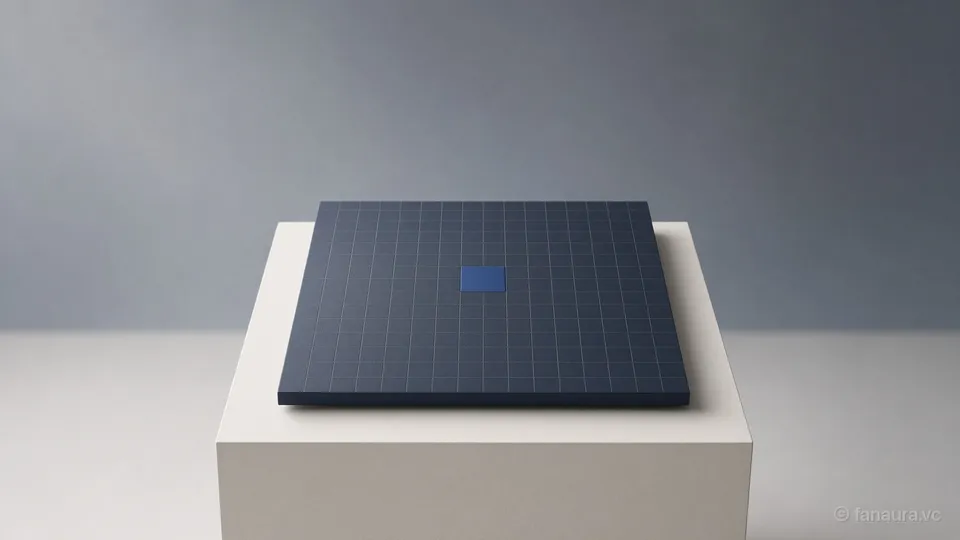
Tesla unveiled D1, a 362-teraflop training chip of its own design. The largest buyers of AI compute now design silicon instead of renting it.
A single chip rated at up to 362 teraflops is Tesla's answer to its training bill. At its AI Day on 19 August the carmaker unveiled D1, a chip of its own design made by TSMC on a 7-nanometre process with more than 50 billion transistors, together with Dojo, the supercomputer D1 will power to train the neural networks behind Tesla's driver assistance software.
Behind the engineering sits a decision about money. Training at this scale has meant buying Nvidia GPUs, and the A100, the standard data center chip, is rated at 312 teraflops at similar reduced precision. When a product depends on retraining large networks on fresh data, compute becomes one of the largest costs in the business, and a chip designed around one workload turns that cost into an advantage. The market is splitting in two: the largest AI users will own their compute stack, most AI-first companies will rent it, and the gap in cost per training run between the groups will widen.
The scale of the plan shows how seriously Tesla means it. About 3,000 D1 chips, mounted on training tiles, are to form a ten-cabinet system rated at 1.1 exaflops. Google and Amazon already design their own machine learning chips, but both sell cloud computing. Tesla shows that a company outside that business will make the same call once its training bill grows large enough, and the move lands just as Washington starts treating chip supply as a strategic issue.
For a young company the conclusion runs the other way. Custom silicon takes years, hundreds of engineers and a workload the size of a vehicle fleet. The rational path is to rent compute, keep models and data pipelines portable across chips, and put the savings into proprietary data. The opening sits in the layers between models and hardware: compilers and runtimes that let one model run on GPUs and new accelerators alike, and tools that cut the number of training runs a team needs.
Dojo itself is still unproven. The first tile has only just been tested, and Elon Musk expects Dojo to be operational next year. Production training on Dojo cabinets on that schedule would give the case for owned compute its first test outside the cloud companies. Two further moves will show how far the split runs: whether Tesla keeps Dojo for itself or sells capacity to others, which would turn a carmaker into a compute supplier, and how Nvidia prices its next data center generation while its largest customers build alternatives.
Compute is turning from a commodity line into a strategic asset for the few companies that train at scale. Fanaura looks for teams whose advantage survives falling compute prices, and the founders it works with plan for a market in which the biggest customers of chip makers also become their competitors.
Building an AI-native company? Apply in five minutes. →
More from Fanaura
Building software that makes AI models portable across chips and clouds? Send us the project.
Fanaura invests its own capital and the capital of its limited partners (LPs), usually through a separate SPV for each deal. If we see a fit, we get in touch.
Get the news by email
One short note each weekday. No marketing, and you can unsubscribe at any time.