Nvidia's Mellanox deal makes the data center the unit of AI computing
Nvidia will pay $6.9 billion in cash for the networks that link servers. Value in AI computing is moving from the single chip to the whole cluster.
The largest purchase in Nvidia's history is a networking company, not a processor maker. Nvidia agreed on 11 March to buy Mellanox, the Israeli supplier of the InfiniBand and Ethernet links that join servers in supercomputers and cloud data centers, for $125 per share in cash, an enterprise value of about $6.9 billion.
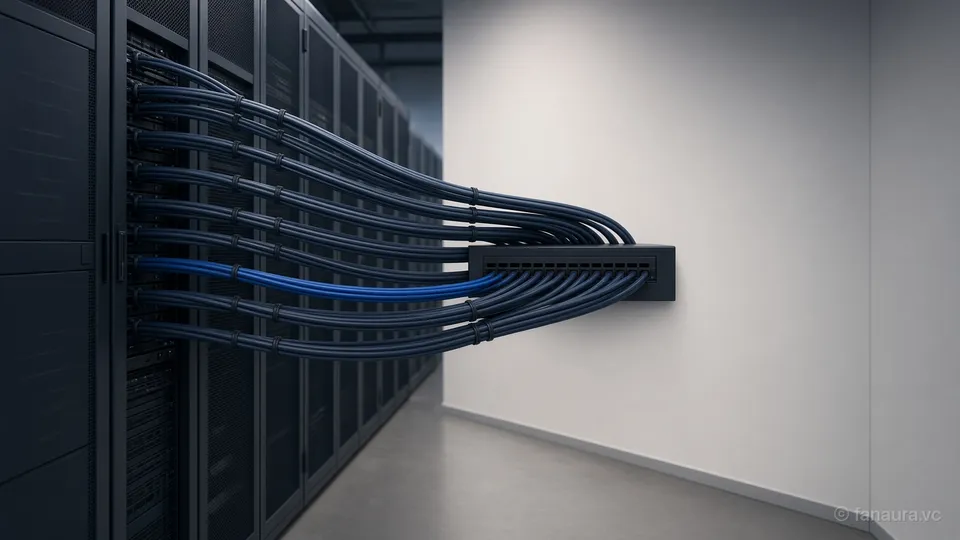
Nvidia is paying for the conviction that the unit of AI computing is now the cluster rather than the processor. Models and data sets have grown too large for any one computer, so thousands of machines have to work as one, and the speed of the links between them sets how fast a model trains. CPU performance gains are slowing at the same time, which pushes more work onto accelerators and more traffic onto the network. Control of both the accelerator and the fabric lets a supplier sell the data center as one system and set its price.
The numbers show what the network is worth. Mellanox's revenue rose 26% in 2018 to $1.09 billion at a non-GAAP gross margin of 69.2%, above the 61.7% Nvidia earned in its fiscal year to January, so Nvidia expects the deal to lift its margin, earnings per share and free cash flow at once. The price comes to about 6.3 times Mellanox's sales. Nvidia will pay from its balance sheet, which held $7.42 billion in cash and securities at the end of January, and the two companies' products already power more than 250 of the world's 500 fastest supercomputers.
The timing follows a soft quarter. Nvidia's data center revenue reached $2.93 billion in its last fiscal year, up 52%, but fell 14% from the previous quarter to $679 million in the three months to January, as customers broadly slowed purchases. Mellanox brings sales equal to more than a third of that segment and deeper ties to the large cloud providers, many of which already buy from both companies. For founders building AI chips, the bar rises: a faster accelerator now competes with a supplier that tunes processor, network and software together, so a start-up has to show how its chips scale across thousands of nodes. Fanaura reads the deal from the application side: every gain in cluster efficiency lowers the cost of training and serving the models products run on.
Regulators and customers hold the main risk. The deal needs approvals in several jurisdictions, and Nvidia has agreed to pay Mellanox a $350 million fee if a regulatory failure ends it. Cloud providers may also resist depending on one supplier for both processors and networks, and Nvidia has pledged that sales and support for Mellanox customers will not change. A close by the end of 2019 on the agreed terms, with the large clouds still buying Mellanox gear, would show that buyers accept the bundle.
Chips still matter, but the profit in AI computing is moving to whoever sells the whole machine, and Nvidia has just paid $6.9 billion to be that seller. Cheaper clusters feed the bet on cheaper, better models at the core of our thesis, a shift we track in our notes on AI computing.
Building an AI-native company? Apply in five minutes. →
More from Fanaura
Building software that makes training or serving models cheaper on any hardware? Send us the project.
Fanaura invests its own capital and the capital of its limited partners (LPs), usually through a separate SPV for each deal. If we see a fit, we get in touch.
Get the news by email
One short note each weekday. No marketing, and you can unsubscribe at any time.