Google's Stadia turns game delivery into a data center business
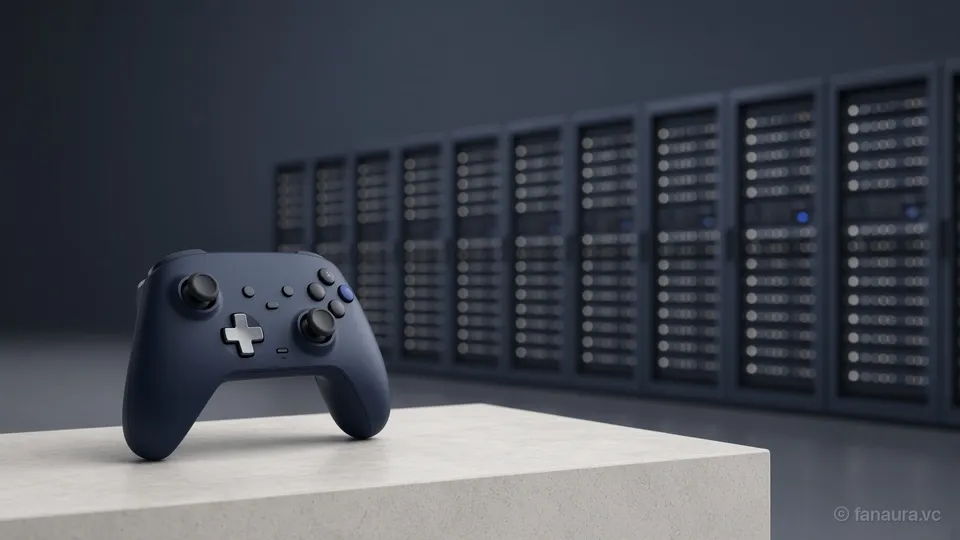
Google launched Stadia in 14 countries with 22 games. Moving play into data centers puts game margins, and machine learning in games, on cloud terms.
A $129.99 bundle and a $9.99 monthly subscription are all Google asks of players who want to skip the console. Stadia, a service that runs games in Google's data centers and streams them to TVs, computers and phones, launched on 19 November in 14 countries across North America and Europe. The Premiere Edition bundle carries a controller, a Chromecast Ultra and three months of service, and the Stadia Pro subscription costs $9.99 a month.
Behind those prices, game delivery turns into a data center business. A console maker sells a machine once and takes a cut of each game. A streaming platform pays for compute every hour a game runs, so utilization and the price of data center capacity set its margin, exactly as they do for any cloud. That favors companies that already own data centers and networks, and it puts the facilities that train and run machine learning models directly behind play. Here games and AI infrastructure begin to share a balance sheet.
Google is stocking the service the way a platform owner does. It opened with 22 games after adding ten titles two days before launch, and it is building first-party studios of its own. It also expects games to feel more responsive in the cloud than on local hardware within a year or two, partly by using machine learning to predict player inputs. A second owner of data centers is already in the race: Microsoft is testing a rival streaming service, Project xCloud, in a public preview it opened in October in the US, the UK and South Korea.
Studios get an offer no console can match. A platform that runs every game on its own servers allows games that scale across many machines, instant play from a link and machine learning that adapts a game to each player in real time. Teams that design for those strengths, instead of porting console games, gain a distribution partner that needs exclusive content. They also take on platform risk while revenue shares and catalog deals are still forming. Tool builders for this setting, from streaming-aware engines to adaptive game systems, sit squarely among the game companies Fanaura's mandate covers.
Subscription retention is what could still undo the case. The launch bundle includes three free months, and the number that counts is how many players keep paying for Stadia Pro once they end. The terms Google and Microsoft offer studios for exclusive and catalog games will show who keeps the margin. Input prediction and the other machine learning features also have to reach real games rather than stay in demonstrations.
Cloud gaming is a bet that play will follow music and video into subscriptions run from data centers. The winners will be the platforms with the cheapest compute and the studios that build for it, and Fanaura News on AI and games follows both.
Building an AI-native company? Apply in five minutes. →
More from Fanaura
Building games or game tools designed for streaming and machine learning? Send us the project.
Fanaura invests its own capital and the capital of its limited partners (LPs), usually through a separate SPV for each deal. If we see a fit, we get in touch.
Get the news by email
One short note each weekday. No marketing, and you can unsubscribe at any time.