Google's phone-sized Assistant moves inference out of the data center
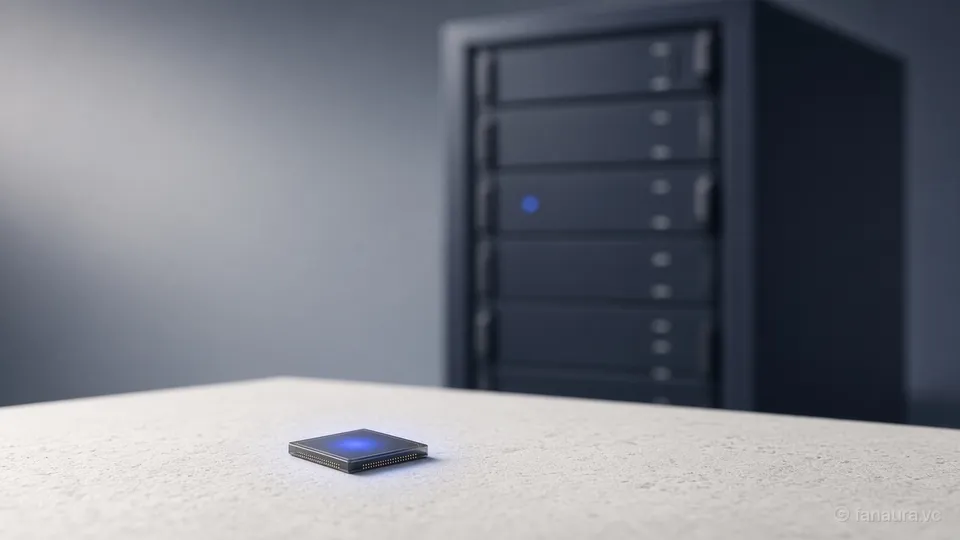
Google cut its speech and language models from 100GB to under half a gigabyte to run on a phone. Inference at the edge changes the unit economics of AI.
Less than half a gigabyte now holds the speech recognition and language understanding models behind Google's Assistant, down from about 100GB in the cloud. Google showed the result on 7 May at its annual developer conference: a next-generation Assistant that runs on the phone, answers up to 10 times faster, transcribes in real time and works without a network connection. It ships first on new Pixel phones later this year.
The shift matters for the cost line more than for the demo. Until now every voice request has been a cost on the provider's servers. Moving the model onto the device turns that variable cost into an engineering cost paid once, while the user's own hardware supplies the computing. Shrinking a model without losing accuracy becomes a product capability as valuable as training it, and the companies that master it serve millions of users at a fraction of the cloud bill.
Google got there by building on advances in recurrent neural networks, and the side effects are worth as much as the savings. Latency falls, the product works offline and the data stays with the user, which makes privacy a property of the design rather than a promise. The same conference showed the second half of the method: Gboard, Google's keyboard, learns new words through federated learning, so the model improves without raw typing data leaving the device.
Model compression, on-device inference and learning across devices without collecting raw data are open fields, and phone chips now carry dedicated processors for neural networks. Start-ups building for health, finance or the workplace can use these methods to handle sensitive data that customers will not send to a server.
The discipline is to design the model for the device from the start: set limits on size, memory and power before training, and measure accuracy on the hardware customers own. Teams like these fit the AI-first companies in Fanaura's venture thesis.
The case against reading too much into one launch is that a phone model can trail the cloud version in quality, leaving device inference to simple commands. The Pixel release will test that, since its speed and accuracy can be measured against the cloud Assistant. Two more signals follow: whether Apple, Amazon and Samsung move their own assistants onto the device, and how far Google opens its compression and federated learning tools to outside developers, which decides whether start-ups build on them or compete with them.
Inference is starting to move from rented servers to hardware that users already own. Companies whose products run where the data lives will carry lower costs per user and fewer privacy risks, and Fanaura looks for them in our conversations with founders building on-device products.
Building an AI-native company? Apply in five minutes. →
More from Fanaura
Building machine learning that runs on the device, close to sensitive data? Send us the project.
Fanaura invests its own capital and the capital of its limited partners (LPs), usually through a separate SPV for each deal. If we see a fit, we get in touch.
Get the news by email
One short note each weekday. No marketing, and you can unsubscribe at any time.